Local Compacts Syndicate content

West Midlands Compact Panel: Promoting good practice locally

image of people in a meeting

The West Midlands Compact Panel has enabled the sharing of good practice about the Compact and Compact principles and helped to strengthen partnership working across the West Midlands. It is attended by both public sector and VCS representatives who have an open and honest dialogue about how best to deal with current issues and challenges.  

Gloucestershire: Influencing the Police and Crime Commissioner

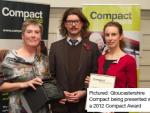
gloucestershire winning a compact award

Gloucestershire Association for Voluntary and Community Action (GAVCA) worked proactively with the Gloucestershire Police Authority and Gloucestershire Constabulary to help the Voluntary and Community Sector to engage with and influence the new Police and Crime Commissioner (PCC).

Guest blog: Coffee, Cake & Compact

This latest guest bIog is from James Hadman, who is Voice Development Manager at Catalyst, the local voluntary sector infrastructure organisation in Stockton-on-Tees.

Here he discusses the challenges and successes of getting their local Compact 'off the shelf' and raising awareness of it locally.
Carlisle: Signing up to a local Compact

carlisle

Carlisle City Council wanted to sign up to the County-wide Cumbria Compact, to strengthen the good relationship they already had with the voluntary and community sector. Before they did so, the Council considered their compliance with the commitments outlined in the Cumbria Compact and identified areas for improvement by undertaking a self-assessment exercise.

Informing and influencing the new health landscape: Case studies

Health Case Study image

This collection of case studies explores how particular areas have successfully engaged with new and emerging health structures – such as Health and Wellbeing Boards.

The case studies provide an insight into what has worked well in different areas across England, with the hope that areas struggling to have any engagement at all can learn from their experiences.

Compact Voice gathered the case studies during the process of developing our briefing ‘Informing and influencing the new local health landscape: A guide for local Compacts’.

Compact work and compliance – can one person really positively influence Compact compliance?

In our work, we all like to think that we have a positive impact, but in some jobs it is harder to measure than others. This is the third in a series of blogs exploring interesting trends to emerge from our 2012 annual survey of local Compacts. In this blog, we delve deep into the data in an attempt to assess the impact of local Compact work.

The reverse localism of local Compacts

Why are we seeing an increase in support for top-tier Compacts but decreasing numbers of district/borough level Compacts?

This is one of the questions that cropped up when analysing the results of the 2012 Compact Voice Annual Survey. This blog (the second in a series of blogs exploring interesting trends from the survey results) will take a closer look at this question and put forward some possible answers.

Cumbria: Using the Compact when negotiating contracts

cumbria image

AWAZ Cumbria is a support organisation for people from Black and Minority Ethnic (BME) communities. AWAZ aims to empower the voice of BME people and communities through influencing strategy, policy and service delivery.

They recently used Compact principles to successfully negotiate the renewal of their Cumbria Equality Consortium Agreement following the loss of some of its funding.

In Defence of the North East

Our recent 2012 survey results highlighted a significant regional difference in both the level of implementation and the perceived effectiveness of the Compact. The North East was one of two regions to have the most negative indicators – according to the figures, respondents felt that both the voluntary and public sectors weren’t engaged with their local Compact.

South Lakeland: Transferring Assets to Town & Parish Councils

view of south lakes

South Lakeland District Council (SLDC) wanted to look for alternative ways to provide public toilets across the region, as part of a drive to improve their provision and reduce costs. The consultation process undertaken by the council ensured that they engaged meaningfully with other sectors and private businesses in an effort to improve the service they were providing.